
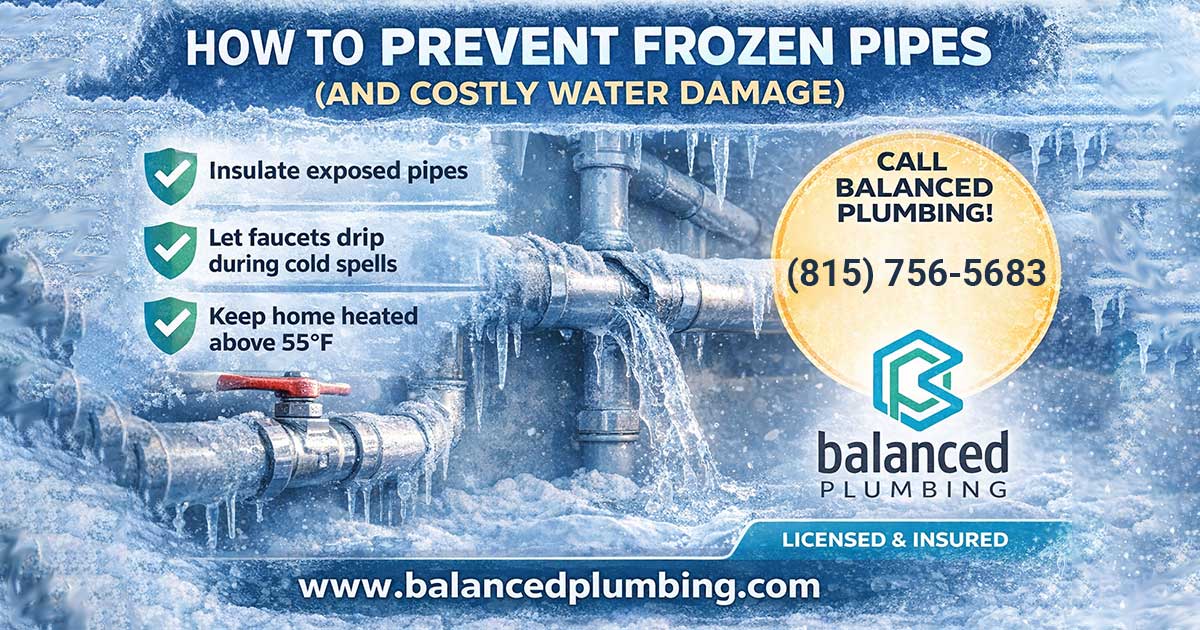
Frozen pipes are one of the most common—and expensive—winter home problems. When water freezes, it expands, putting pressure on pipes until they crack or burst. A single burst pipe can cause thousands of dollars in damage. The good news is that frozen pipes are largely preventable with some simple preparation and smart habits.
Below is a practical, homeowner-friendly guide to keeping your pipes safe all winter long.
1. Insulate Vulnerable Pipes
Pipes located in unheated areas are the most at risk. This includes basements, crawl spaces, attics, garages, and exterior walls.
What to do:
- Wrap exposed pipes with foam pipe insulation or heat tape
- Seal gaps where pipes enter walls or floors
- Add insulation to crawl spaces and basements if needed
Insulation slows heat loss and can be the difference between a safe pipe and a frozen one.
2. Keep Your Home Warm (Even When You’re Away)
Letting the house get too cold is a common cause of frozen pipes, especially during overnight cold snaps.
Best practice:
- Keep the thermostat set to at least 55°F, even if you’re not home
- Avoid large temperature drops at night
- If you’re traveling, don’t turn the heat off entirely
Consistent heat helps protect pipes hidden behind walls and under floors.
3. Let Faucets Drip During Extreme Cold
Running water is much harder to freeze than standing water.
When temperatures drop below freezing:
- Allow faucets connected to exterior walls to drip slightly
- Both hot and cold lines benefit from slow movement
- A steady drip can relieve pressure and prevent bursting
This small increase in water usage is far cheaper than pipe repairs.
4. Open Cabinet Doors
Kitchen and bathroom pipes often run behind cabinets, where warm air doesn’t circulate.
Easy fix:
- Open cabinet doors under sinks on cold nights
- This allows heated air to reach the pipes
- Especially important for sinks on exterior walls
It’s simple, free, and surprisingly effective.
5. Disconnect and Drain Outdoor Plumbing
Outdoor plumbing is extremely vulnerable in winter.
Before freezing weather:
- Disconnect garden hoses
- Shut off exterior water supply valves
- Drain outdoor faucets completely
- Cover hose bibs with insulated faucet covers
Neglecting outdoor plumbing is one of the most common causes of winter pipe damage.
6. Seal Drafts and Cold Air Leaks
Cold air blowing directly onto pipes can freeze them quickly.
Check for drafts around:
- Windows and doors near plumbing
- Foundation vents
- Electrical and plumbing wall penetrations
Use caulk, spray foam, or weather stripping to block cold air intrusion.
7. Know Where Your Main Water Shutoff Is
If a pipe does freeze or burst, acting fast limits damage.
Be prepared:
- Locate your main water shutoff valve now
- Make sure it turns easily
- Show everyone in the house where it is
Shutting off water quickly can prevent flooding and structural damage.


